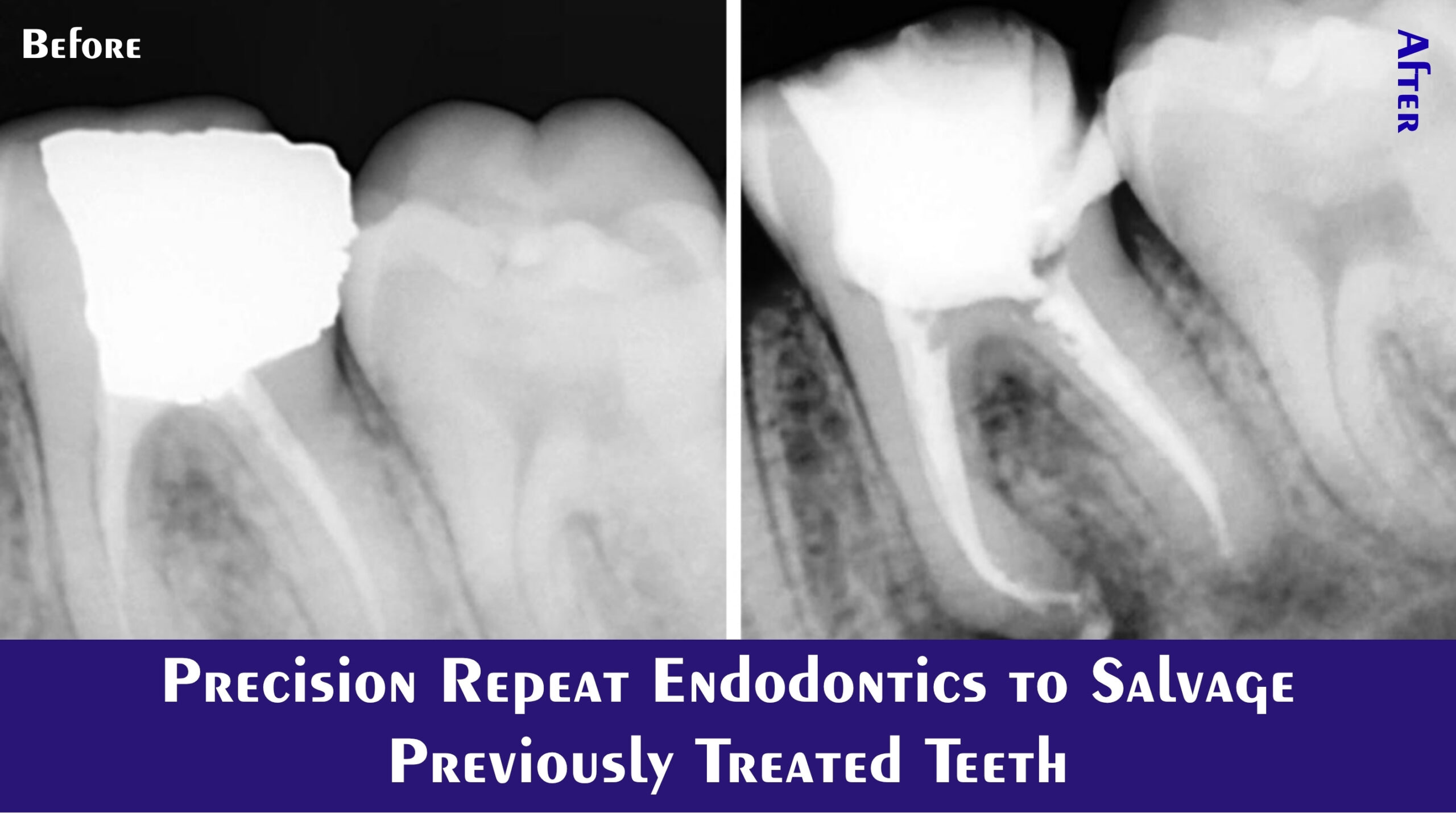
Repeat endodontics
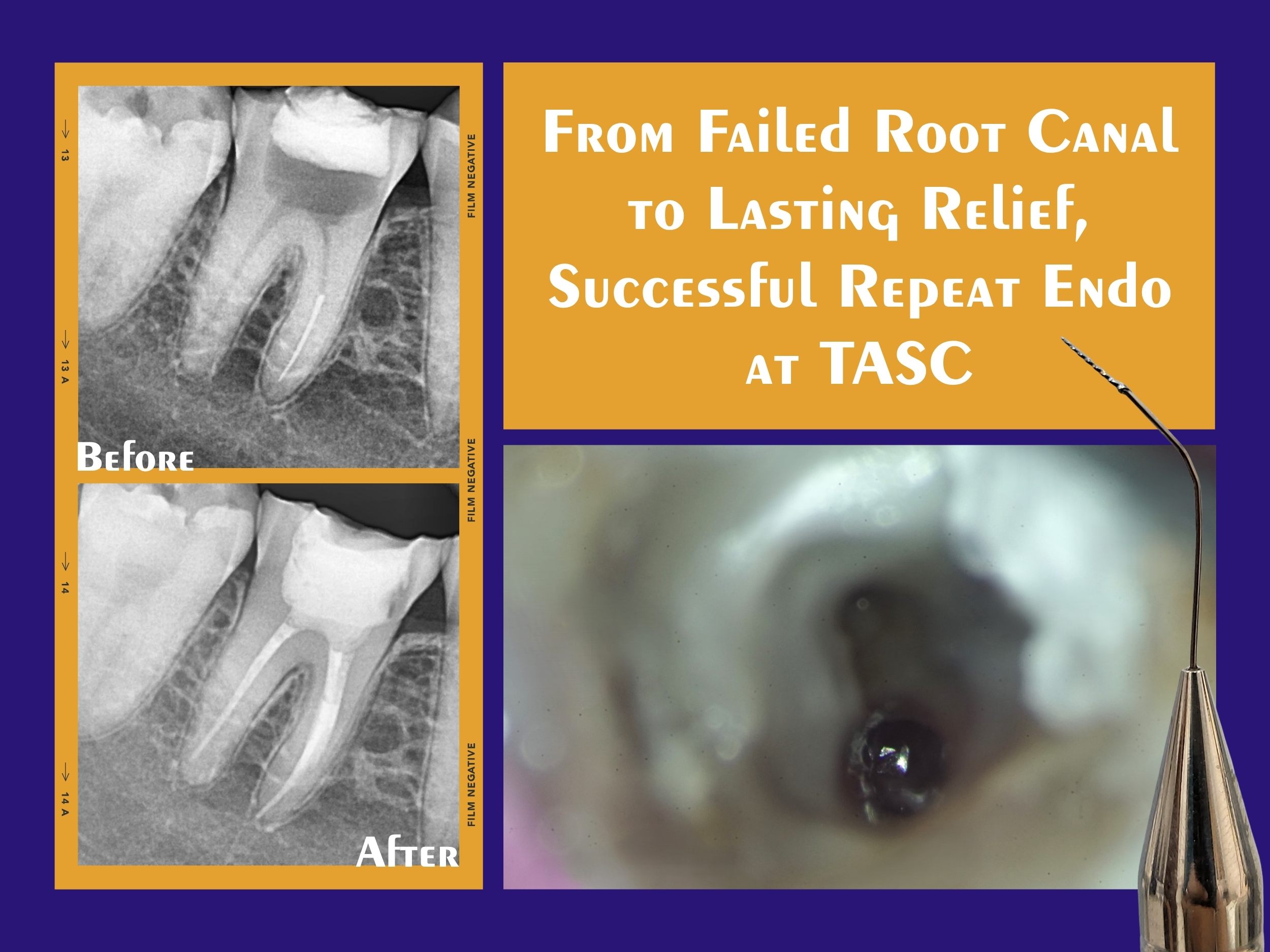
At times the tooth that has had a root canal done on it gets reinfected with bacteria, causing severe discomfort and pain. Even though the root canal, if maintained properly, can last lifetimes, sometimes teeth do not heal properly and become reinfected. If your tooth fails to heal or develops new problems, you have a second chance. An additional procedure may be able to support healing and save your tooth. In such situations, it may be necessary to repeat or refine the previous root canal treatment.
A tooth could require retreatment for several reasons. Bacteria can readmit into the root canal system even if the best care is provided. Maybe a canal was overlooked or an obstruction prevented a complete treatment at the first sitting. Sometimes new decay exists and has exposed the bacteria to the root canal filling material. Another compromise of the original treatment is possible via a crack in the tooth or a broken crown.
At the TASC, we pride ourselves on the use of advanced diagnostic tools and technology that will pinpoint the root of your dental discomfort. We will then devise a workable treatment plan to rid you of that particular tooth ordeal and make this next visit on the road to root canal therapy as painless and easy as possible.
What will happen during the treatment?
Our dentists will first assess the extent of reinfection or crack of the crown in your tooth to ensure a proper and precise plan towards repeat endodontics.
We will reopen your tooth to gain access to the root canal filling material. In many cases, complex restorative materials—crown and core material—must be disassembled and removed to permit access to the root canals.
We clean the canals and carefully examine the inside of your tooth using magnification and illumination, searching for any more canals or unusual anatomy that requires treatment.
The next step is to fill and seal the canals and place a temporary filling in the tooth.
You will have to return to us as soon as possible to have a new crown placed on the tooth to protect and restore it to its full function and ensure no additional infections in the tooth.